Marie-Madeleine Guimard (1743-1816)
When Gelsey Kirkland's "Dancing On My Grave" was published, many outside the dance world were shocked by what she had to say. Those of us who are in the business didn't blink an eye. I, for one, did not approve of her life style, "That ballet, like Caesar's wife, should be above reproach." I am a realist and know that it is not so, that from the very beginning ballet and dancers were not different from the rest of the world. You are asking yourselves what I am trying to say? This is just an introduction to bring to your attention a dancer of great renown by the name of Madeleine Guimard.
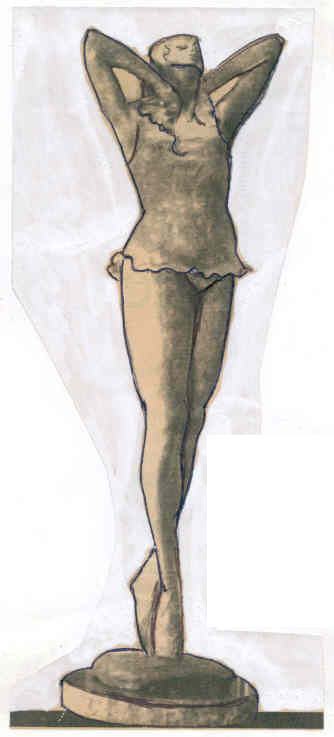
Marie-Madeleine Guimard (1743-1816) a French dancer who joined the corps of the Comedie Francaise when only 15, and the Paris opera in 1763. She was appointed premiere danseuse noble the same year. She danced in many ballets by Noverre and Gardel, usually as a naive shepherdess - in mark contrast to her notorious love-life. She was so slim that she was called "le squelette des graces." She hated Noverre, and through her lovers such as the Bishop of Orleans had financial support for his ballets withheld. (Sounds familiar?)
Guimard's home in the Chausee d'Antin or her charming country house at Pantin were constant scenes of three official weekly suppers; the first for the great nobles, the second for artists and writers, and the third for her theatrical friends and the more fashionable whores. Both homes housed a private theatre managed by financier De la Borde. She produced startlingly obscene ballets and risque farces. Guimard called her theatres Temple of Terpsichore. She knew how to seduce the corrupt court society, and had wire screened boxes built where ladies could come without danger of recognition. Little wonder that Noverre, a man absorbed not in the world, but in his work, was no match for her machinations.
She married dancer and poet Jean Etienne Despreaux in 1789, and retired, happily married, and lived to be 73 years old.
(First published January 1992)