Jean-Georges Noverre (1727-1810)
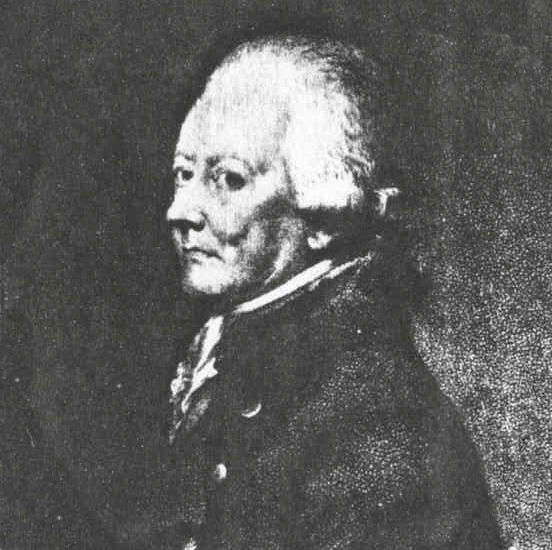
Jean-George Noverre was known as "The Shakespeare of the Ballet." None of his 150 ballets has been handed down to us. His influence on the art gives him the title "The Grandfather of the Ballet" as we know it today. In 1754 he produced his first ballet and in 1760 published his book, Letters on the Dance. This book set out his ideas: Although to day much of their content is taken for granted, when they were written and indeed until the beginning of the twentieth century, were revolutionary...Prior to Noverre, a critic of the period wrote that "dancing had become so little expressive of anything dramatic that puppets and machines might easily replace the dancer."
The history of ballet consists of periods of intense technical discovery and development and then a pause during which some mastermind codifies these discoveries and shows their true use as an art form.
I have been asked by many students just what was Jean Georges Noverre's ideas that were so revolutionary. According to Dorothy Samachson in her book "Let's Meet The Ballet" I quote, "The introduction of drama into ballet was greatly hastened by the work of a choreographer, Jean Georges Noverre (1727 - 1809), who in 1760 published a book in which he laid down important rules and principles of the ballet. Among other improvements, Noverre introduced the pas d'action, the step of action, of pantomime used to advance the story of the ballet. This and other innovations helped break the rigid formula of court dances, and led to the development of the dramatic possibilities of the ballet. Noverre helped change the ballet from a divertissement, a mere pastime, into a ballet d'action, a ballet of action that told a story of human emotions.
Noverre also championed reform in costumes, and he showed that musician, choreographer and designer must work together in creating a ballet. Many of the principles that he was first to state still hold good today.
Thanks to Mary Cover, who gave me Noverre's book, I have had a chance to read his letters. I would like to quote Noverre in his own words just how his ideas were received.
When I decided to write on an art which is the continual object of my studies and reflections, I little foresaw the success and effect of my interest by men of letters and persons of taste; but, at the same time, they were received with spite and ill-humor by those from whom they were primarily designed.
After I read the letters I feel that every teacher, choreographer, dancer and critic should read these letters time and time again.
Due to the fact that ballet is an art of tradition, what we know of the past has been handed down, dancer to dancer, teacher to students. Therefore, what we see may have been changed dozens of times. Balanchine said, "So, if a few years go by and I won't be here it will be my ballets, but will look different." New directors, rehearsal personnel and dancers would all have a part in changing the original choreography.
Noverre's protege Dauberval (1742 - 1806) is remembered for two reasons. First, he choreographed "La Fille Mal Gardee" in 1786. It was the first ballet to be based on the life of the people, thus breaking away from the mythological ballets. It is the oldest ballet in present repertoire. As you are reading this, someplace in the word this ballet is in rehearsal or performance. Second, he was a great influence in the career of Salvatore Vigano. Under Vigano's direction the Italian ballet had its greatest period, and after his death came the decline of the Italian ballet. We owe Vigano a great deal, for he was the teacher of Carlo Blasis.
Noverre was greatly influenced by Marie Salle and her ideas of freedom in dance, and the importance of emotion. He felt that technique alone wasn't enough for a dancer to master, but to bring alive the story or theme of the dance. (I am sure that my students hear this in almost every class I teach.) He studied with the Great Dupré. As a dancer he made his debut at the Paris Opera Comique in 1743.
He went to Berlin in 1744, Dresden in 1747 and Strasburg 1749 where he met his wife, actress Marguerite Sauveur. After dancing in Marseilles he went to Lyons where he danced with Camargo and choreographed his first ballets. Dancing through Europe he finally settled in London, but at that time anything French was not accepted. Garrick thought of Noverre as the SHAKESPEARE OF THE DANCE. He stayed in London, secretly working as ballet master. It was there that he wrote his famous LETTRES SUR LA DANSE, published simultaneously in Lyons and Stuttgart.
He returned to Lyons where his theories about the ballet d'action gave rise to his work. His theories were very controversial. In Vienna he was thought to be the greatest choreographer of all time and he was also an excellent teacher. Finally, he was accepted in Paris as ballet master. He was bitterly opposed by M. Gardel and Jean Dauberval who thought they would get that position after G. Vestis retired. The appointment was made due to the influence of Marie Antoinette, whose teacher he had been in Vienna. He remained until 1780. After the French revolution he had to flee to England. At London King's Theatre he formed an excellent company with P. Gardel, Antoine Bournonville and later with Marie Guimard, A. Vestris and Didelot. He returned to France before his death and edited a new edition of his Letters. He died in a modest retreat at Saint-Germain.
During his life he choreographed more than 150 ballets. None of his ballets have survived, but his theories are with us to this day. When we look at ballet today it is dificult for us to understand what went before. I have a feeling that if alive today he would love Anthony Tudor and hate George Balanchine. I wonder what Balanchine thought of Noverre's theories or if he ever read Noverre's "Letters." Personally I don't want to discuss this matter. I am sure many of you know what I look for in a ballet or a dancer.
Noverre's Letter on Dance is out of print and I suspect that the only copy available to you would be at the Lincoln Center Library of the Performing Arts.
Noverre believed in a flawless technique, but it was to be used to further the story or theme of the ballet, not as a circus performer. It is difficult for us to understand that when seeing Swam Lake what ballet was like before Noverre. His idea of dance was to tell a story in the most direct way possible. He is credited with Ballet d'Action. Although there was evidence that others had tried it before. Noverre did write the book on the subject of the use of pantomine. He also encouraged the set and costume designers not to over power the choreography. (Think what he would have said seeing the revival of ABT's GAITE PARISIENNE or the tasetless NYCB's SLEEPING BEAUTY.) I am ready to argue the last statement. You see I am as outspoken as Noverre, and proud of it. I want to give you some of his quotes.
"Poetry, painting and dancing, Sir, are, or should be, no other than a faithful likeness of beauitful nature."
"A ballet is a picture, or rather a series of pictures connected one with the other by the plot which provides the theme of the ballet: the stage is, as it were, the canvas on which the composer expresses his ideas."
Speaking of many of his peers he wrote " Why are the names of choreographers unknown to us? It is because works of this kind endure only for a moment."
"Choreographers should consult the pictures of great painters."
"A choreographer, devoid of intelligence and good taste, will treat this portion of the dance mechanically, and deprive it of its effect, because he will not feel the spirit of it."
" Some ill-disposed critics, who do not understand enough of the art to judge it."
" I do not counsel disorder and confusion at all, on the contrary I desire that regularity be found even in irregularity."
" It is rare to meet with choreographers capable of real feeling."
"If { choreographers } their powers of emotion be weak, their powers of expression will be likewise."
"A well-composed ballet is a living picture."
"A genius may break ordinary rules and advance by new paths when they lead to the perfection of his art."
"I admire the skill of the human machine."
"I do not understand the plan which does not afford me an introduction, plot and climax."
"If the colours be too vivid and too brilliant, it will deprive the figures of the relief that they should have; nothing will stand out because nothing will be arranged artistically."
"Dancing without music is no more intelligible than singing without words."
" I have said, Sir, that dancing was too complicated, and the symmetrical movement of the arms too uniform, for the picture to have variety, expression and simplicity; therefore, if we desire to approach our art in the light of truth, let us give less attention to the legs and more to the arms."
"When one wishes to enter into the dancing profession, the first consideration to be taken is that of physique."
"Probably, were good masters ( teachers ) more common, good pupils would not be so scarce."
"The composition of ballets demands, in my opinion, Sir, a fertile and poetic imagination."
"As you know, Sir, a man's face is the mirror of his passions, in which the movements and agitations of the soul are displayed, and in which tranquility, joy, sadness, fear and hope are expressed in turn."
"A noble air, fine features, a proud bearing, a majestic look--that is the mask of the dancer in the serious style."
"Do not put so much energy into the execution, but invest it with more expression. "
"While the pupil, dazzled by success and dizzy from applause, gives himself up to the deepest ingratitude. He forgets even the name of the one to whom he owes it all."
"One cannot be an excellent dancer without being firm in the loins."
(First published March 1988)